Finding great-sounding headphones has never been easier. The average quality of the dynamic driver has skyrocketed over the last five years, and innovation in alternative driver technologies has not slowed down. Planar magnetic drivers, once the domain of premium luxury designs, have effectively become mainstream over the same period.
But better sound comes with greater complexity. Modern consumer headphones are no longer simple converters. These are dense ecosystems of circuit boards, batteries, sensors and glue. Your $450 wireless headphones may no longer even have a 3.5mm input, rendering them useless once the battery dies.
So what happens if the battery fails or a circuit board breaks?
Headphone prices are rising, but warranty protection is not
High-quality sound has never been more accessible, but that hasn’t brought down the prices of so-called “premium” technology-heavy headphones from major brands or boutique providers. Sony, for example, sells its flagship WH-1000XM6 wireless headphones for a whopping $460. For this money you get the legally safe minimum: a completely inconspicuous one-year guarantee.
What’s even more puzzling is that the Sony MDR-MV1, a $420 professional-use headphone, doesn’t clearly disclose its warranty terms on Sony’s own website. Coverage is there, but you’ll have to do a lot more research than you should to figure out the duration or the fine print.
Smaller, design-focused brands don’t fare any better. Master & Dynamic charges $750 for the MW75, and US buyers still get the same paltry one-year warranty. Premium prices, protection against bargain prices.
But here’s the real question. If prices for high-end headphones continue to rise, why aren’t warranties being honored? Should consumers really be expected to pay for layers of technology they may never use and then absorb the cost of repairs when something inevitably fails?
If you live in the EU, the answer is actually no. Under EU regulations, many of these headphones come with a two-year warranty instead of the one-year warranty that US buyers receive. The crucial point is that the profit calculation already works with a two-year guarantee. These companies could offer the same insurance coverage in the USA. They simply decide against it because it saves money and hasn’t affected sales so far.
Your headphones are more than future electronic waste
I’ve taken Sony to task for its poor warranties on high-end products, but to be fair, the company is one of the better players when it comes to access to repair manuals and replacement parts. Sony lists around 35 individual spare parts for the WH-1000XM6, including the most important one of all: the battery.
However, availability does not automatically mean repairability. These headphones are still held together with generous amounts of glue, a design decision that reduces manufacturing costs while making them difficult to repair at home. Although parts are for sale, the hurdle to actually using them remains high.
You deserve products that last longer than a year or two. You deserve products you can repair without a PhD in materials engineering or a fully equipped home workshop. There are brands that agree with this and have built their identity around durability and repairability.
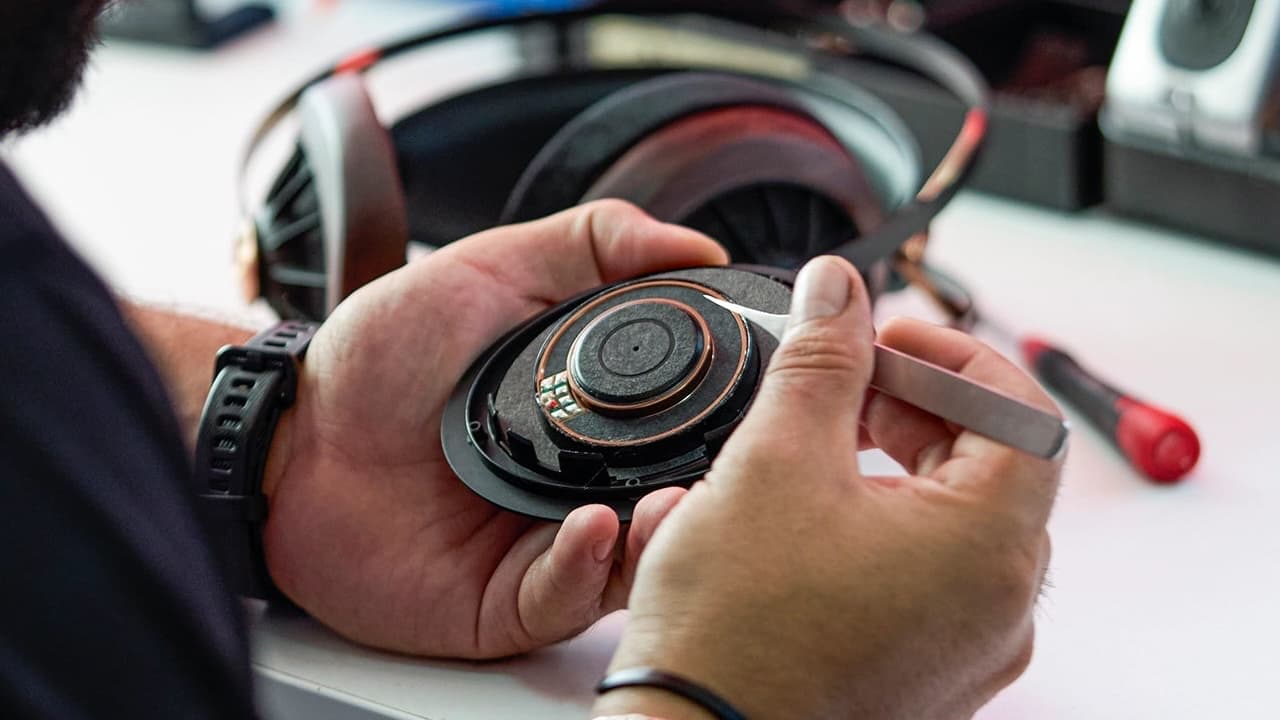
Meze Audio is one of them. You can order replacement parts for any headphones sold and carry out repairs yourself, without any glue. The company also provides clear, cleanroom-style videos that walk owners through basic maintenance and repair tasks. Their message is consistent and refreshingly direct: replacement parts are just an email away and customers should be able to restore their equipment to working condition at any time.
Older brands are hit or miss, but Beyerdynamic performs better than average. The company offers a two-year warranty on most of its products and sells a wide range of replacement parts to ensure long-term ownership. Even relatively inexpensive wired models like the DT 770 Pro X benefit from this confidence in workmanship and ease of maintenance.
Beyerdynamic’s flagship wireless headphones, the Aventho 300, also come with a two-year warranty, but there’s no obvious way to purchase replacement parts. This contrast says a lot. Once batteries, circuit boards, and glue come into play, even well-intentioned brands tend to resort to designs that are far more difficult to keep alive in the long run.
Repair doesn’t always mean self-service
Not every product is realistic repairable from its owner. It’s just part of modern ownership. But that doesn’t mean that the products themselves have to be disposable. There is an important difference between something you cannot repair yourself and something that cannot be repaired at all.
We’ve already seen that simpler, wired headphones are far more usable, at least on the over-ear side. Headphones and IEMs are a different story. Their compact size and delicate internal components make meaningful repairs difficult, especially at home. Still, some brands are doing the right thing by offering in-house repairs at fair, transparent pay rates, proving that repairability doesn’t have to stop just because DIY does.
For example, Campfire Audio offers repair services for every product it manufactures, provided replacement parts are still available from the original manufacturing partners. Repairs are priced transparently based on the nature of the failure, and when you combine this policy with a standard global two-year warranty, you get IEMs that are clearly designed for long-term ownership rather than scheduled replacement.
High-end boutique custom IEM manufacturer AAW takes a slightly different approach. Warranty coverage, while more modest for one year, is backed by a hassle-free flat rate repair fee that still gives owners a predictable and reasonable way to keep their headphones running.
Speaker owners aren’t entirely sure either
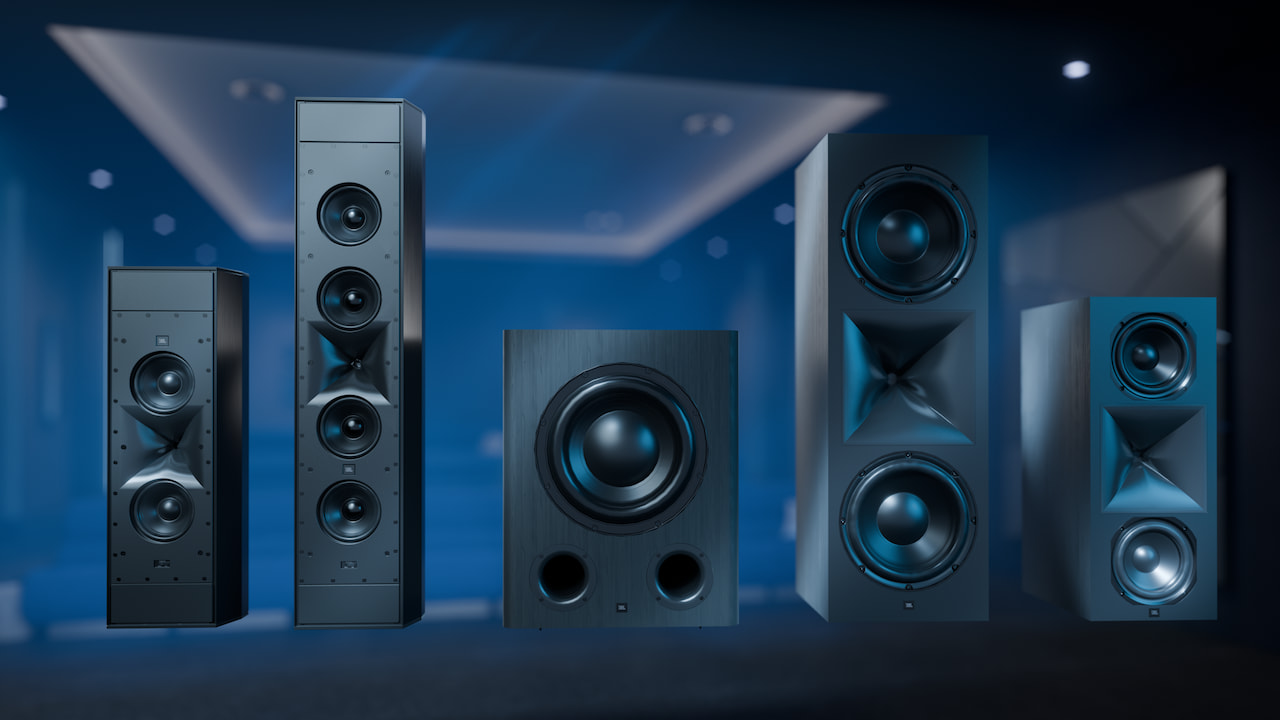
Given the lower complexity of parts and often higher prices, one would expect speakers to come with warranties that reflect this reality. Some do, but many still fall short of expectations. The result is an uneven environment in which price does not provide a reliable indication of protection.
In general, active speakers with built-in amplification tend to offer longer warranties than passive designs. This additional electronics stack typically forces manufacturers to think more seriously about long-term support, even if execution remains inconsistent.
Premium audio brands like KLH still take warranty coverage seriously. A ten-year, no-questions-asked guarantee sets a clear benchmark. Even outside the warranty window, KLH sends replacement parts or commissions a nearby dealer to carry out the repair. At prices above two thousand dollars, this level of long-term support seems reasonable rather than extraordinary.
It helps that these speakers are passive. Passive designs are relatively simple and consist of the enclosure, drivers, and a small crossover to split the incoming signal. Active speakers are far more complex, with amplifiers, power supplies and digital components, but their warranties are often worse. Even expensive active systems that cost well over $1,400 often come with only a one or two year warranty. If you prioritize warranty length, a few brands stand out. Audioengine, for example, offers a three-year warranty and repair support as standard across its entire range, even on the cheapest models. In addition, REL offers a 3-year warranty on its subwoofers and SVS offers an unconditional 5-year warranty on all of its speakers and subwoofers.
The conclusion
The brands mentioned here represent only a small section of the broader audio market. There are plenty of repair-focused companies that haven’t made it, just as there’s no shortage of brands developing products around the planned obsolescence of battery-powered products. The point is simple. It is quite possible to offer audio products that can be repaired on clear terms and at a reasonable cost.
There is no reason to accept the idea that expensive equipment should be treated as disposable equipment when it breaks or wears out. Warranty length and repair support should be part of the purchase decision and not an afterthought. If a company truly stands behind its products, it should be willing to prove it. The only way to push the industry in this direction is to vote with your wallet.
My next headphones come with a meaningful guarantee. My next pair of speakers will be from a brand that has a real repair network. I’m done buying future e-waste. You should be too.