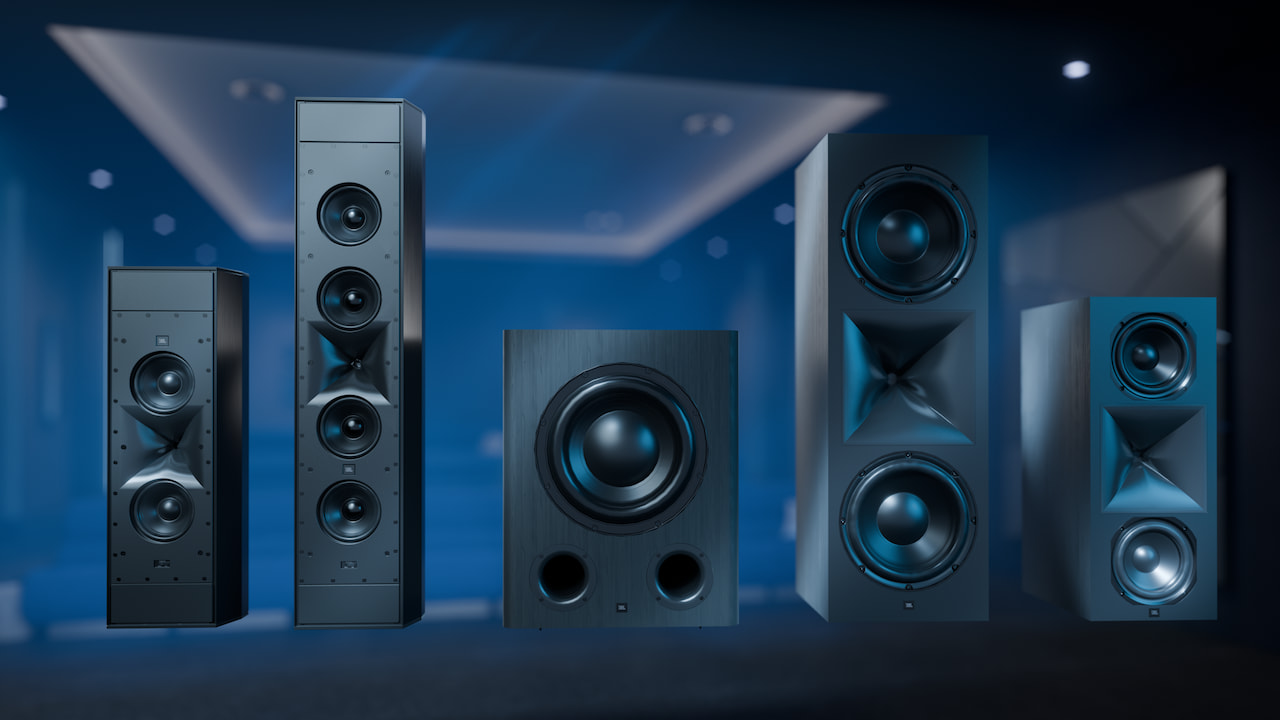
The HARMAN Luxury Audio Group is not getting involved in the ISE this year, but is going full throttle. With the introduction of nine new JBL synthesis With tailored speakers and three next-generation processing and amplification components, the company is launching one of the most significant additions to the JBL Synthesis ecosystem in years, making its global debut ISE 2026.
The message is clear: reference-level home theater is no longer a one-size-fits-all offering, and JBL Synthesis wants to be part of every serious installation conversation – from architectural wall designs to fully equipped theater rooms.
What makes this move even more meaningful is the timing. HARMAN Luxury Audio was already busy making a wave of important announcements at the show arkalso new RADIA speakers and updated audio-video amplifiers, and the introduction of JBL Synthesis provides further choice for integrators building high-end media rooms and uncompromising home theaters.
This is not a product upholstery; It’s a deliberate addition to the toolbox for designers and installers who want scalable performance, consistent voice output, and system-driven flexibility without mixing brands or crossing their fingers.
JBL Synthesis SCL XL built-in speaker range for reference-level architectural home cinema
With a new generation of SCL XL in-wall speakers specifically aimed at high-performance, no-excuses home theater rooms, JBL Synthesis is clearly committed to serious architectural installations. Built around the brand’s latest transducer technology, updated compression drivers and precise HDI horn geometry, the new models are designed to disappear into the wall while providing the kind of scaling and dynamic headroom that integrators typically associate with large floorstanding systems. All four are sonically coordinated and are intended to function as part of a complete JBL synthesis system, regardless of whether they are handling LCR tasks in front of the stage behind an acoustically transparent screen or anchoring surround and immersive channels in larger rooms.
SCL-2XL is the batsman of the group. With four 8-inch woofers and a powerful compression driver, it is designed for reference-level LCR use in large and extra-large theaters, but also has the power to handle demanding surround tasks where smaller in-wall speakers simply fail.
SCL-4XL takes a more flexible approach, combining two 8-inch woofers with a compression driver designed for wide, even coverage. It is aimed at premium cinema environments where balance and uniformity across multiple seating positions are as important as pure output.
SCL-6XL With a quad 6.5-inch configuration, the size decreases a bit, but don’t mistake that for a compromise. It is designed to deliver excellent performance while offering more installer-friendly proportions, making it easier to integrate into high-quality architectural designs without sacrificing dynamics.
SCL-7XL is the most surgical of the four. Its dual 6.5-inch layout is paired with an offset HDI horn that allows for precise targeting of the sound to the listening area. This makes it an ideal choice for surround and center channel applications where directivity control is critical and placement options are less forgiving.
JBL Synthesis SCL room speakers for powerful home cinema
Not every serious media room can be carved into the walls, and JBL Synthesis knows this. The new SCL in-room and on-wall speakers are designed for installations where wall mounting is not practical but reference-level performance is still non-negotiable. These models bring the same system-controlled voicing, compression driver dynamics and output capabilities as JBL Synthesis theaters to spaces that rely on cabinets, wall mounting or traditional in-room solutions.
SCL-10XL is at the top of the in-room range. With its two 10-inch woofers, it is designed for high performance and scalability, whether placed behind a projection screen or integrated into custom cabinets. This is the type of speaker meant to anchor large rooms where dynamics and headroom are more important than visual subtlety.
SCL-10 takes a more compact approach while maintaining the core character of JBL Synthesis. Its dual 6.5-inch configuration offers strong dynamics and flexibility for medium to large rooms, making it a practical choice when space or sightlines limit larger enclosures.
SCL-9XL is designed for impact. With a quad 5.25-inch driver array and a powerful compression driver, this wall model is designed to compete with large displays and immersive systems that require scalability and performance without entering the room.
SCL-9 is the slimmer, more design-friendly alternative. With two 5.25″ drivers, it is intended for LCR or surround tasks in rooms where aesthetics are as important as performance, without sacrificing JBL Synthesis sound.
The offer is rounded off by the SSW-5a new 12-inch active subwoofer with an output of 1,000 watts. Designed to integrate seamlessly with the SCL speakers, it delivers deep, controlled low frequency performance and completes the ecosystem for in-room, wall and mixed installation systems.
The bottom line is simple: whether the speakers are housed in the wall, on the wall or behind a screen, JBL Synthesis gives integrators more options to deliver a cohesive, powerful theater experience without architectural hassle.
JBL Synthesis next generation processing and amplification
JBL Synthesis does not view electronics as an afterthought. In addition to the expanded SCL speaker lineup, the brand is launching three new processing and amplification components designed to serve as the backbone of modern immersive home theater systems. Designed for flexibility, scalability and real-world installation requirements, these electronics are aimed squarely at integrators who need predictable performance in complex Dolby Atmos, DTS:X Pro, IMAX Enhanced and AURO-3D systems – without stacking mismatched boxes and hoping for the best.
Immersive AV processor SDP-70 is the flagship. With 24 processing channels, it is designed for large-scale immersive designs where channel count, routing flexibility and network integration are important. Dirac Live Active Room Treatment (ART) support enables advanced low frequency control across multiple speakers and subwoofers, making it well suited for dedicated theaters and high-end media rooms with demanding floor plans.
SDP-60 Immersive AV Processor brings much of this functionality to a more streamlined 16-channel platform. It features reference-level decoding, fully balanced outputs, matrix channel allocation and support for Dirac Live ART optimization. This is the processor intended for demanding cinema halls that do not require extreme channel counts but still require precision and consistency.
SDR-40 Immersive AV Receiver takes an all-in-one approach without dumbing things down. It combines 16-channel processing with nine channels of Class G amplification, delivering high performance and improved efficiency in a single package. For integrators looking to simplify system deployment without sacrificing immersive performance, it is a practical solution for premium installations.
What ties these components together is intent. They are designed to seamlessly integrate with the extended SCL speaker family, ensuring consistent sound reproduction and predictable results in a wide range of room sizes and configurations.
The conclusion
This is one of the most significant JBL Synthesis updates in years, not because of any single headline product, but because the changes are so comprehensive and deliberate. JBL Synthesis isn’t just adding more speakers or aiming for a higher channel count – it’s reshaping the range to cover far more real-world use cases. The expansion includes in-wall, on-wall and in-room speakers, paired with updated processing and amplification that is now scalable both up and downfrom large, complex immersive theaters to more accessible systems with lower channel counts.
The last part is important. While the SDP-70 leads the market with 24-channel capability, the SDP-60 and SDR-40 clearly signal that JBL Synthesis is setting its sights on integrators building serious theaters that don’t require extreme channel layouts. Sixteen-channel processing, all-in-one receiver options, and Class G amplification make the ecosystem more flexible and easier to deploy without forcing every project into flagship territory.
What is still missing are the details that ultimately define the value. JBL Synthesis has not yet released full technical specifications, full dispersion data, detailed amplifier power numbers or pricing. Until these are on the table, this remains a strong directional statement and not a final judgment on performance or competitiveness.
So who is this for? This range is aimed squarely at individual installers, system designers and homeowners who are building dedicated theaters or premium media rooms and want a cohesive, system-validated approach rather than assembling components from multiple brands. If you value scalability, predictable results, and a single ecosystem that can evolve from a sophisticated sixteen-channel setup to comprehensive, reference-level immersive theater, the appeal is obvious. Whether it becomes a must-have will depend on the specs, the price, and how aggressively JBL Synthesis positions this lineup once those numbers finally come in.