
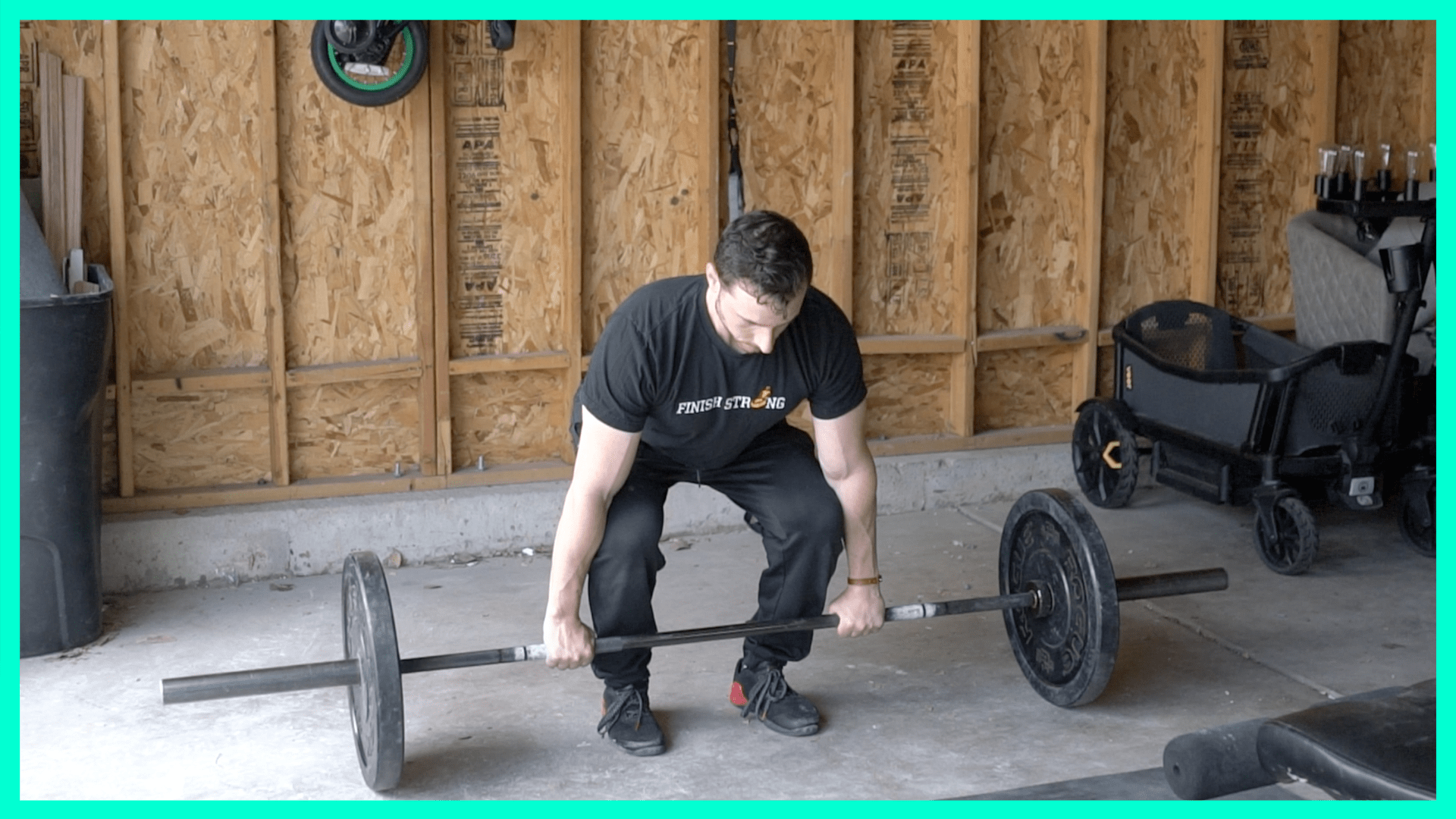
Getting slimmer doesn’t mean you have to sweat it out in the gym.
When I first started coaching, I thought barbell squats and deadlifts were non-negotiable. I have included them in almost every customer training session.
But in over 17 years of coaching, I’ve learned that while they are incredible exercises, they aren’t necessary to get strong, build muscle, or lose body fat – especially if you’re over 40.
I didn’t remove them from the toolbox. Not every client responds poorly and some goals require training in these exercises.
But mostly I choose different exercises.
Before we continue, don’t confuse avoiding heavy barbell squats with not knowing how to do squats properly.
The ability to perform a deep bodyweight squat and hip flexion (the basic pattern of a deadlift) is critical to a lifetime of pain-free movement. You should train and maintain these patterns throughout your life.
But you don’t need a barbell to teach your body these patterns– or to build strength if you are confident.
What makes an exercise a “right fit”?
So what makes an exercise work well for you? There are a few rules to check off.
First: Movement should be painless under strain.
These aren’t the Marines. “No pain, no gain” won’t help you build more muscle or get stronger – it will only lead to injuries and months of missed training.
Second: You should feel the target muscles working during the exercise.
While Research debates how important the “mind-muscle connection” isit’s still a useful filter: like an exercise feels can help you choose the right products for your body.
For example, when performing a squat variation, you want to feel it in your quadriceps, hamstrings, and glutes. If you feel it mostly in your lower back – and are sure your technique is solid – it’s probably not the best solution for you.
In short, a good exercise adaptation:
- Is pain-free under stress
- Lets you feel the right muscles working
- Builds strength without putting strain on your body
Use these rules as a guide and you’ll find moves that not only fit better, but also make you stronger, faster, and help you train for a lifetime.
With that in mind, here are some of my favorite replacement exercises for barbell squats and deadlifts.
If you’re struggling with excruciating pain, limited mobility, or just want less stressful exercise options, these 10 alternatives (plus a few bonus exercises) are for you. You’ll still build serious strength—without putting any strain on your joints
10 alternatives to squats and deadlifts that build strength without pain
Alternatives to the barbell squat
Low box climbs – Don’t sleep on this deceptively simple move. A low box allows the weight to be loaded. And if your hips are tight, a low box step-up ensures you stay within the range of motion your hips can handle (and that protects your lower back).
Box squat with dumbbells – This move works the legs and helps you squat deeper by improving your hip mobility. If your hips are stiff, try turning your toes out a little.
Once the dumbbell box squat feels good—and you’ve added some weight—try heel elevated goblet squats.
Wall hack squats – Training at home? This exercise works your quadriceps (the front of your legs) while protecting your back.
Split squats with front foot elevated – Start here with the split squat. Raising the forefoot takes pressure off the front leg and makes the movement easier to learn.
Then things get even more exciting with everyone’s favorite move, the Rear-Foot Elevated Split Squat.
Push or pull the carriage – Push or pull, both are low-impact ways to build serious lower body strength. My favorite training tool for clients over 40.
Alternatives to the barbell deadlift
Box split RDLs – Although traditional RDLs feel great, a Kickstand RDL (or B-Stance RDL) is a great way to improve hip mobility, develop single leg stability, and work the glutes.
Assisted single-leg deadlift – Single-leg deadlifts are a fantastic move for your hamstrings and glutes. But the limiting factor is often not your strength, but your balance. Use support to focus on challenging loads and high-quality movements.
Tall, kneeling. Good morning – While a barbell good morning may not feel good for your lower back, Tall Kneeling Good Mornings will help you work the lower back and hamstrings with far less shear stress on the lower back.
Thigh curls (machine, Swiss ball, TRX, slider) – Gentle on the knees and functional, maintain a regular diet of hamstring curls during your workouts. Oh, and this is where machines shine.
Kettlebell swings – If you haven’t learned how to make a proper swing, they could potentially tweak your back. But that’s like saying that picking up a laundry basket is bad for your back (but that’s not the case). If you do it wrong, anything can happen.
When it comes to the kettlebell swing, the path of the kettlebell is important. If you slide the bell toward the floor (and don’t swing it under your butt), you’ll put more strain on your lower back.
And don’t limit yourself to standing straight or making bilateral swings. Try mixing up your postures to achieve greater flexibility and athleticism.
Training is meant to build you up, not tear you down.
Heavy squats and deadlifts are powerful tools—but they’re not the only ones. If your goal is to get leaner, stronger and stay active for decades, then this is for you better What really matters are the different versions of squats and hinges for your body.
If you need expert help creating a suitable strength training plan your Body – pain-free and individually tailored to your goals – Find out more about Market Pulse Brief online coaching.
BJ holds a bachelor’s degree in health and human performance as well as multiple certifications including Precision Nutrition Level 1 and BioForce Certified Conditioning Coach. Over the course of his 14-year coaching career, he has been fortunate to coach a wide range of clients. From online customers looking to get in top shape to CEO Nate Checketts (Rhone) and CEO Marcelo Claure (Softbank) to professional skateboarder Sean Malto. Before he began his coaching career, he was a research assistant in the sports science laboratory.


